
Preventable complications remain a significant challenge, affecting many surgical patients. These complications not only impact patient outcomes but also contribute to increased costs and potential indemnity claims for hospitals.
The question remains: is there a proven way to systematically reduce these risks, enhance patient safety, and manage costs all at the same time?
The National Surgical Quality Improvement Program (NSQIP) offers a compelling answer. Developed by the American College of Surgeons, NSQIP is an internationally recognised, evidence-based initiative that’s transforming how hospitals approach harm prevention. By harnessing the power of robust, risk-adjusted clinical data, NSQIP empowers hospitals to track, analyse, and act on detailed information about surgical care, enabling them to identify preventable harm and implement targeted quality improvement strategies.
What makes NSQIP different?
Unlike traditional reporting systems that often provide only a partial view, NSQIP’s specially trained Surgical Clinical Reviewers extract over 135 clinical variables directly from patient medical records. This ensures the data is both accurate and comprehensive, capturing a detailed picture of patient care and outcomes.
The program’s focus on 30-day post-operative results, including mortality, morbidity (such as infections and complications), and unplanned reoperations, means hospitals can spot trends, respond quickly to emerging risks, and measure the true impact of their improvement efforts.
By benchmarking outcomes with peers while adjusting for patient risk factors, hospitals can see how they measure up and learn from other health services. This culture of transparency and continuous improvement is driving real change in surgical safety and quality.
Globally, more than 750 hospitals participate in NSQIP, with 44 in Australia (primarily in Queensland and New South Wales). In Victoria, 3 hospitals are currently enrolled, and interest is growing as the benefits become increasingly clear.
Results that matter
The impact of NSQIP is significant. Hospitals participating in the program have reported up to a 45% reduction in post-operative complications and an average 27% decrease in mortality. These improvements mean fewer infections and fewer unplanned returns to theatre, leading to better outcomes for patients and their families.
How NSQIP supports harm prevention and reduces indemnity risk
NSQIP’s value extends well beyond clinical improvement. It’s a powerful tool for harm prevention and risk mitigation, directly supporting VMIA’s mission to reduce medical indemnity claims in Victoria’s public health sector. The program’s granular data highlights specific areas for intervention, such as surgical site infections, venous thromboembolism, and urinary tract infections. This allows hospitals to address the root causes of harm, rather than relying on generalised solutions.
Unlike administrative or claims datasets, NSQIP relies on clinical data extracted from patient charts, capturing up to 61% more complications. This enables earlier identification and mitigation of risks before they escalate to indemnity claims. By tracking patients for 30 days post-surgery, hospitals can intervene promptly to reduce readmissions and subsequent complications, further reducing exposure to claims and associated costs.
VMIA’s role in supporting safer services
VMIA is committed to supporting Victorian hospitals in adopting NSQIP as part of our broader harm prevention strategy. On 18 February, VMIA hosted an online information session featuring insights from Victorian hospitals leading the NSQIP pilot. Participants learned how data-driven approaches are transforming harm prevention in surgery and how VMIA’s initiatives can support meaningful improvements in surgical outcomes.
VMIA facilitated an exclusive ‘Meet the Experts’ session on 2 March at the Peter MacCallum Cancer Centre, featuring experts from the American College of Surgeons (ACS) and local NSQIP specialists. This provided an opportunity for hospital leaders, risk managers, and quality improvement professionals to share experiences, ask questions, and build a community of practice focused on safer surgery for all Victorians.
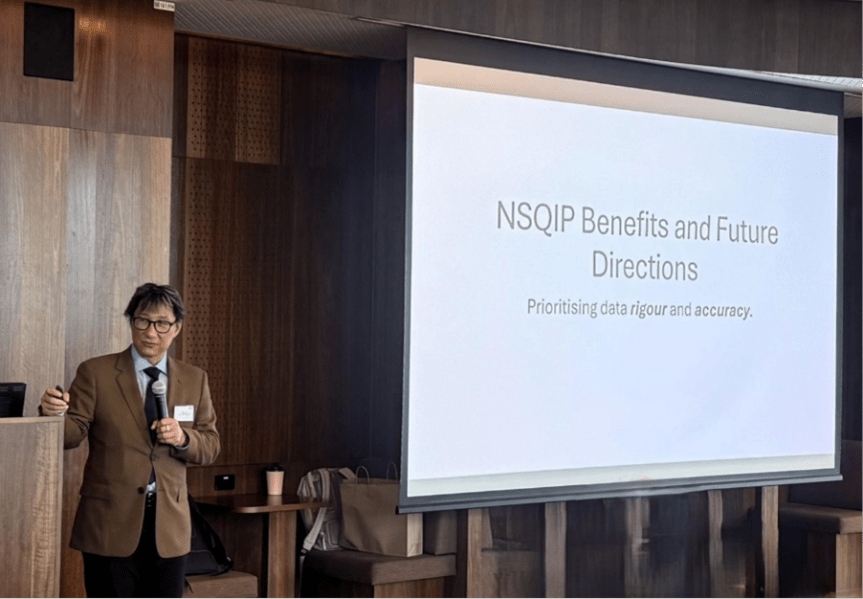
Dr. Clifford Y. Ko, Senior Vice President, Research and Optimal Patient Care Division, American College of Surgeons, presenting on the NSQIP benefits and future directions.
Updated